






Odessa Tow Truck Accident Lawyer – 24/7 Help After a Crash
If a tow truck just struck your vehicle on I‑20, sideswiped you merging off Loop 338, or caused a pileup near Highway 191, the next 72 hours will determine the strength of your entire case. Tow truck companies move fast-repairing damage, resetting dash cams, and overwriting electronic logs-while you’re still sitting in the Medical Center Hospital ER trying to figure out what happened.
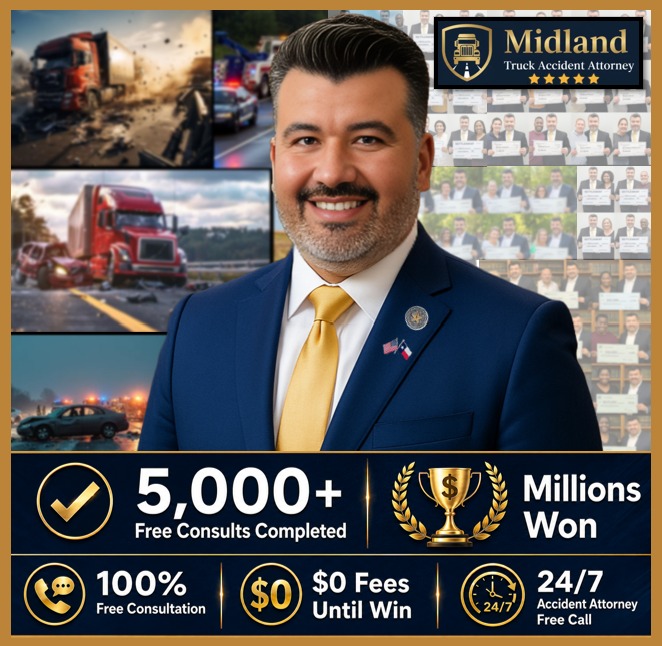
Midland Truck Accident Attorney, led by Erik Garza, handles ONLY commercial truck accident cases, including tow truck accidents in Odessa and across West Texas. This is not a general practice law firm that dabbles in car accident cases between slip‑and‑fall claims. Every resource, every investigator, and every dollar of the firm’s effort goes toward holding trucking companies and their insurers accountable for the serious injuries they cause.
Right now you may be facing mounting medical bills, missed oilfield shifts, aggressive phone calls from insurance adjusters, a totaled vehicle, and genuine fear about what comes next. That is exactly why the firm offers a 100% free consultation with $0 upfront and no attorney’s fees unless we win. Evidence from tow trucks-dash cams, GPS tracking, ELD driver logs, and dispatch records-can disappear within 72 hours after an accident in Odessa, sometimes sooner.
Call (713)677‑0423 now for a free Odessa tow truck accident case review – available 24/7/365, Se Habla Español.
Why Odessa Trusts Midland Truck Accident Attorney
When a car crash involves a commercial tow truck rather than a passenger vehicle, you need a firm with verifiable credentials in commercial truck litigation-not promises.
- $20 Million+ recovered for truck crash victims in the Permian Basin (past results do not guarantee future outcomes; see disclaimer below).
- 30+ years of combined legal team experience focused exclusively on commercial truck litigation.
- 99% case success rate in resolved truck accident claims.
- 100% exclusive truck accident focus – no general car accident cases, no slip‑and‑fall docket, no distractions.
- $1,000 Texas Performance GUARANTEE – the only law firm in Texas offering this unique promise to clients.
- Local office at 203 W Wall St Suite 615, Midland, TX 79701 – serving Odessa, Midland, Andrews, Big Spring, Stanton, Crane, and all Permian Basin oilfield routes.
Why Odessa Tow Truck Crash Victims Choose Us
Choosing the right accident lawyer after a tow truck collision comes down to three things: whether they can recover compensation you actually deserve, whether they can preserve crucial evidence before it vanishes, and whether they will reduce the emotional toll on your family while fighting your case.
- Exclusive truck focus – Tow truck accident cases involve layered commercial insurance policies, federal and state regulations governing commercial vehicles, and liability chains that stretch from the driver to the towing company to the oilfield client who dispatched the call. This firm does nothing but truck crashes, which means every case strategy is built around the complexity that separates commercial truck accident cases from an ordinary car accident.
- Oilfield insider knowledge – Erik Garza’s corporate background with ExxonMobil and Noble Energy gives the team firsthand understanding of how oilfield trucks operate, how dispatch pressure works on lease roads along US‑285 and Highway 191, and how energy companies structure subcontracts to limit their own exposure.
- Rapid evidence preservation – The team sends same‑day spoliation letters to tow companies, storage yards, and their commercial insurers to lock down dash‑cam footage, ELD data, maintenance logs, and phone records. Evidence must be preserved within 72 hours after a truck accident, and every hour that passes is a risk.
- Trial‑ready from day one – Insurance companies in Ector and Midland Counties know this firm will file suit if a fair settlement is not offered. That reputation alone can increase serious settlement offers substantially.
- Bilingual support – Se Habla Español, with Spanish‑speaking staff available for Odessa families navigating the legal process.
- 24/7/365 availability – Emergency consultations for late‑night crashes at I‑20 and Loop 338, bad‑weather collisions on US‑285, or any tow truck accident that occurred on West Texas roads.
Odessa Tow Truck Accident Cases We Handle
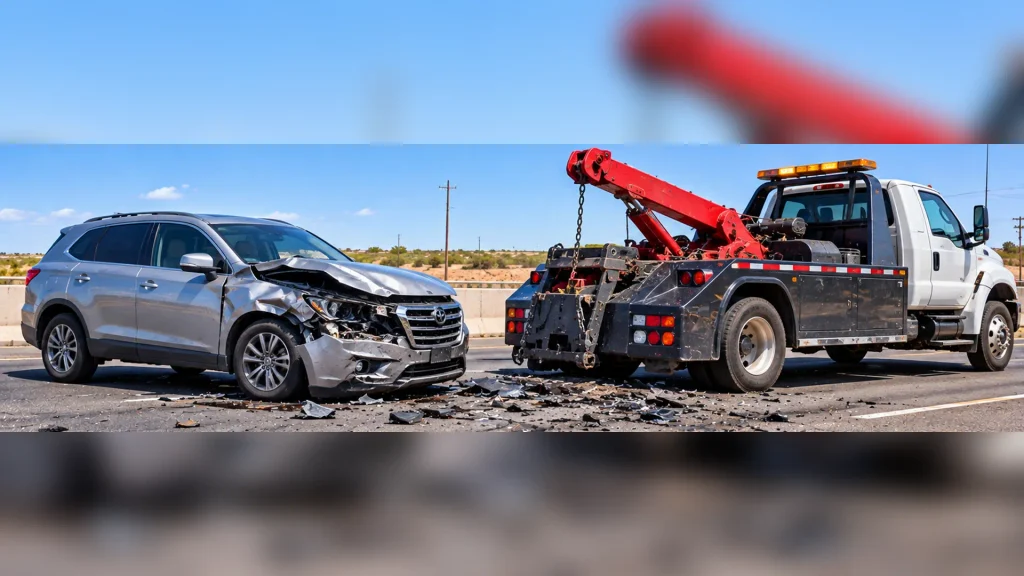
Tow truck crashes are a specific and dangerous subset of commercial vehicle accidents. They frequently happen on congested Odessa corridors-I‑20, Loop 338, SH 191, US 385-and on the unpaved oilfield access roads that feed into those major routes. Oilfield trucks share roads with commuters in Odessa daily, and when a tow truck is added to that mix-often at the scene of an existing breakdown-the risk of multi vehicle collisions escalates.
Below are the most common tow‑truck‑related scenarios the firm handles.
Collisions with Disabled Vehicles on I‑20 and Loop 338
A tow truck stops on the shoulder of I‑20 near Odessa to assist a stalled vehicle, and a distracted or speeding driver plows into the scene. Or the tow operator improperly positions the truck, blocking part of a travel lane and triggering a chain‑reaction crash that can leave victims with catastrophic injuries.
These collisions often involve poor placement of warning triangles, failure to activate proper emergency lighting, and inadequate traffic control-especially at night on high‑speed corridors. The intersection of SH 191 and Loop 338 alone recorded 268 crashes between 2019 and 2023, making it the highest‑crash‑count intersection in Ector County.
Determining liability in these cases requires investigating whether the tow truck driver followed safety procedures, whether the towing company trained its operators properly, and whether the other driver was speeding or engaged in distracted driving. Multiple parties can be liable in Odessa truck accidents.
Improper Towing, Hook‑Ups, and Vehicle Drop‑Offs
When a towed vehicle is not properly secured, it can detach from the tow truck and collide with traffic on Hwy 385 or Highway 191. A fishtailing vehicle crossing lanes at highway speed causes not only severe property damage but also serious injuries to occupants of passenger vehicles who have zero time to react.
Liability in these cases often falls on the tow company for negligent training, rushed procedures driven by oilfield time pressure, or faulty equipment. Common hook‑up failures include:
- Worn or undersized safety chains that snap under load
- Improperly seated tow bars or wheel‑lift cradles
- Failure to verify towed‑vehicle weight against the tow truck’s rated capacity
- Winch malfunctions from deferred maintenance
The firm investigates the full maintenance history, dispatch records, and training protocols of the towing company to establish liability and pursue compensation for every responsible party in the chain.
Rear‑End and Side‑Swipe Crashes Involving Tow Trucks
Tow trucks re‑entering traffic after a roadside assist frequently cause rear end collisions or sideswipe crashes when the driver misjudges gaps, pulls into an unsafe lane, or fails to check blind spots created by the flatbed or towed vehicle. Overloaded flatbeds and distracted or fatigued tow drivers working long overnight shifts compound the danger.
Fatigue is a significant factor among oilfield shift drivers-and tow operators working the same corridors face similar pressure, particularly during peak oilfield activity when call volume spikes. Speeding is a common cause of car accidents in Odessa, and when combined with a heavy tow rig merging into fast‑moving traffic, the results are devastating.
Key evidence in these cases includes:
- Black‑box / event data recorder (EDR) information showing speed and braking at the moment the crash occurred
- GPS and route‑history data revealing how many hours the driver had been on the road
- ELD (Electronic Logging Device) records documenting hours of service and rest breaks
- Dash‑cam footage from the tow truck or surrounding vehicles
Pedestrian and Roadside Worker Injuries
Some of the most devastating tow truck accidents involve stranded motorists, road workers, or tow operators themselves being struck while working on I‑20 shoulders or at scene locations along Loop 338. These pedestrian‑impact crashes happen when approaching drivers fail to obey the Texas “Move Over/Slow Down” law, which requires motorists to either change lanes or reduce speed when passing a tow truck with activated emergency lights.
Violation of this law is a misdemeanor-and it is also powerful evidence of negligence in a personal injury or wrongful death claim. Truck accidents in these scenarios often result in severe injuries including traumatic brain injuries, spinal cord damage, and multiple fractures often needing extensive surgical repair.
The emotional suffering for families is immense. Victims may face months of rehabilitation, permanent disability, and the psychological trauma of PTSD and anxiety that disrupts every aspect of daily life.
Tow Trucks Serving Oilfield and Industrial Sites Around Odessa
The Permian Basin is a region with distinctive trucking accident challenges, and nowhere is that more evident than when tow trucks service oilfield operations. Tow operators hauling heavy pickups, service trucks, and drilling equipment to and from oil leases and frac sites face rough lease roads, overloaded vehicles, and relentless time pressure to clear disabled rigs quickly so production can resume.
Overlapping liability is common. The tow operator, the oilfield service company that dispatched the call, the energy company that owns the lease, and the maintenance provider who last serviced the tow truck may all bear responsibility. Trucking companies and energy operators often use layered corporate structures to shield themselves from liability.
Erik Garza’s corporate oilfield background gives the firm a strategic advantage in unraveling these relationships, identifying every responsible party, and forcing appropriate insurance coverage to the table. Local knowledge of trial courts and insurance adjusters can impact case strategy in ways that an out‑of‑town firm simply cannot replicate.
Common Injuries in Odessa Tow Truck Accidents
The sheer size and weight of commercial tow trucks-combined with the high speeds on I‑20, US‑285, and Loop 338-mean that collisions with passenger vehicles and pedestrians almost always produce severe injuries. Common injuries include traumatic brain injuries and spinal cord injuries, and many victims face life‑altering consequences.
- Traumatic brain injuries and concussions from high‑impact collisions, often requiring long‑term cognitive rehabilitation.
- Spinal cord injuries, herniated discs, and paralysis requiring lifelong medical care, adaptive equipment, and home modifications.
- Crush injuries, multiple fractures, and orthopedic damage needing extensive surgical repair and months of physical therapy.
- Severe burn injuries from fuel fires or vehicle intrusion that can require extensive medical treatment including skin grafts.
- Amputations that may occur due to crash impact or surgical necessity, permanently changing a victim’s ability to work.
- Psychological trauma including PTSD, anxiety, and sleep disturbance-often undervalued but deserving of full compensation.
The firm works with local and regional medical providers to document long‑term costs and the impact on oilfield or industrial work ability, ensuring that every element of your medical records supports the compensation you deserve.
What to Do After a Tow Truck Accident in Odessa
The steps you take immediately after a tow truck crash can protect both your health and your legal rights. Tow companies often move their trucks back into service quickly, and immediate documentation of the accident scene can help preserve critical evidence.
- Check for injuries and call 911 if needed-request police and EMS even if injuries seem minor. An Ector County crash report is foundational evidence for your case, and police reports become part of the official record.
- Move vehicles to safety if possible after a crash to prevent secondary collisions, especially on high‑speed corridors like I‑20.
- Document the accident scene with photos and notes-capture the tow truck, any towed vehicle, skid marks, flares or cones, warning lights, and surrounding traffic conditions.
- Exchange insurance details with the other driver involved and get the name, phone number, and employer of the tow truck driver. Photograph permits and company logos on the truck.
- Seek medical attention promptly, even for minor injuries. Medical evaluation after an accident is important even if no injuries are immediately felt-some serious injuries, including traumatic brain injuries, may not show visible injuries right away.
- Avoid giving detailed statements to the other party’s insurance adjusters immediately after an accident. Do not sign anything or provide a recorded statement before speaking with an accident attorney.
- Notify your insurance company about the accident quickly but limit details to basic facts.
- Contact Midland Truck Accident Attorney as soon as possible so Erik Garza’s team can send evidence preservation requests promptly to protect critical data-including spoliation letters to the tow company, storage yard, and insurer within 24 hours.
How Our Odessa Tow Truck Accident Claim Process Works
Understanding how the legal process unfolds-from your first call to final resolution-reduces stress and helps you make informed decisions during a difficult time.
Step 1: Free Case Review and Strategy Call
When you call or submit an online form, you speak directly with Erik Garza or a trained team member-not a call center. A clear communication strategy with the client is essential during complex cases, and that starts with the very first conversation.
The team conducts a detailed review of the crash location (e.g., I‑20 near a specific mile marker, Loop 338 at 8th Street), your injuries, medical treatment to date, and all available insurance information. There is no cost, no obligation, and Spanish‑language consultations are available.
Step 2: Immediate Evidence Preservation and Investigation
Within hours, the firm sends same‑day spoliation letters to the towing company, storage yard, and all commercial insurers to preserve dash‑cam footage, ELD logs, GPS data, phone records, and maintenance logs. Commercial vehicle crashes in Midland-Odessa rose 160% recently, and the volume of cases means tow companies cycle through evidence quickly.
The team also collects Odessa Police Department and DPS crash reports, gathers scene photos and witness statements, and deploys accident reconstruction experts when needed-particularly for high‑speed collisions on I‑20 or US‑285. Gathering evidence early and thoroughly is the foundation of every successful truck accident claim.
Step 3: Building the Medical and Damages Picture
The firm coordinates with treating physicians, physical therapists, and life‑care planners when necessary to understand your long‑term medical needs. Detailed medical records documenting every diagnosis, procedure, and prognosis become the backbone of your damages case.
Lost wages for oilfield workers, CDL drivers, and hourly workers in Odessa are carefully documented-including lost overtime common in oilfield work. Pain, suffering, emotional distress, and loss of future earning capacity are evaluated with equal rigor.
Step 4: Negotiation with Insurers and Litigation if Needed
The firm presents a comprehensive demand backed by evidence to the tow company’s insurer and any other at‑fault parties. Towing accidents involve complex commercial insurance policies-often with minimums of $500,000 or more for incident‑management tow trucks-and the firm knows how to navigate those layers.
If insurance companies refuse to offer fair compensation, the firm is prepared to file suit in Ector or Midland County courts. The trial‑ready approach increases leverage, and many cases settle after suit is filed but before trial.
Step 5: Resolution, Payout, and Aftercare
Once a resolution is reached, the firm handles distribution of settlement funds, addresses all medical liens, and guides you through final paperwork. Most personal injury lawyers work on a contingency fee basis, and this firm is no different: $0 upfront, and no fees unless we win.
Even after the case closes, the team remains available for questions about ongoing medical care, lien disputes, or any other concern.
Compensation You May Recover After a Tow Truck Accident
Every tow truck accident case is unique. The compensation you may seek depends on the severity of your injuries, the number of responsible parties, the available insurance coverage, and the specific facts of how the accident occurred. Categories of damages recoverable under Texas law include:
- Medical bills – ER treatment at Medical Center Hospital, surgeries, follow‑up visits, physical therapy, prescription medications, and projected future medical expenses.
- Lost wages – including missed days on drilling rigs, pipeline crews, warehouses, and lost income from overtime common in oilfield work. 540+ truck accidents occurred in Midland County in 2024, and many of the victims were working people who lost critical paychecks.
- Loss of future earning capacity – if injuries prevent returning to heavy labor, CDL driving, or other physically demanding work.
- Pain and suffering and mental anguish – ongoing physical pain, anxiety, sleep issues, PTSD, and emotional distress that affects daily life.
- Property damage – repair costs or total‑loss value of your vehicle and personal property inside it.
- Permanent disability and disfigurement – long‑term mobility limitations, scarring, or amputations that may occur due to crash impact or surgical necessity.
- Wrongful death damages – funeral expenses and loss of financial support for surviving spouses, children, and parents.
Punitive damages may also be available when tow companies show gross negligence-for example, knowingly sending out unsafe trucks with deferred maintenance or forcing exhausted drivers to keep working despite hours‑of‑service violations.
Past results do not guarantee future outcomes. Every case is different. Results reflect the specific facts, injuries, and circumstances of each individual matter.
Texas Laws That Affect Odessa Tow Truck Accident Claims
State laws and filing deadlines directly impact your legal rights and your ability to recover compensation after a tow truck crash in Odessa. Understanding these rules early can make the difference between full compensation and no recovery at all.
Two‑Year Statute of Limitations
In Texas, the statute of limitations for personal injury lawsuits is generally two years from the date of the crash. For wrongful death claims, the two‑year clock typically starts on the date of death. Missing this deadline can bar your financial recovery entirely, with only rare exceptions.
Texas law requires proving direct causation for liability, and building that proof takes time-investigation, medical treatment, expert analysis. Contacting a lawyer well before the deadline approaches gives the legal team the time needed to build the strongest possible case.
Modified Comparative Negligence in Texas
Texas follows a modified comparative negligence rule. You can usually recover compensation as long as you are 50% or less at fault for the accident. However, your recovery is reduced by your percentage of responsibility.
For example, if a jury determines your total damages are $100,000 but you were 30% at fault, your recovery would be reduced to $70,000. If you are found more than 50% responsible, you recover nothing.
This is precisely why it is critical to push back against insurance adjusters who try to unfairly blame the victim. The tow company’s insurer will look for any opportunity to shift fault-claiming you failed to move over, were following too closely, or were distracted. Independent investigation, video evidence, and witness accounts are essential to counter those tactics.
Special Rules and Standards for Tow and Commercial Trucks
Specialized federal and state regulations govern commercial vehicles, including tow trucks. The Federal Motor Carrier Safety Administration regulates towing operations for interstate carriers, including requirements for Electronic Logging Devices, hours of service, driver qualification, and vehicle maintenance.
At the state level, Texas Occupations Code Chapter 2308 requires tow trucks to carry specific permits-including an Incident Management Permit for non‑consent tows-and maintain substantial liability insurance. Violations of these regulatory requirements can be powerful evidence of negligence in your claim.
Out‑of‑town firms often lack the understanding of local enforcement realities on Odessa roads and oilfield routes, including how regulations interact with the practical demands of Permian Basin oilfield traffic.
Results and Case Highlights (Tow & Commercial Truck Crashes)
The following examples illustrate the type of commercial truck accident cases the firm handles. They reflect real‑world scenarios common on Odessa and West Texas roads.
- Oilfield service truck rear‑end collision on I‑20 – A fatigued driver operating an oilfield service truck struck a passenger vehicle near Odessa during an early‑morning shift change. The victim suffered spinal cord injuries requiring multiple surgeries. The firm identified driver error, hours‑of‑service violations, and negligent supervision, recovering significant compensation from multiple parties including the trucking company and the energy operator.
- Tow truck side‑swipe on Highway 191 – A tow truck merging from a shoulder assist collided with a commuter’s sedan near the SH 191 and US 385 intersection. Investigation revealed the operator’s dash cam had been disabled and ELD records showed the driver had exceeded permitted hours. The firm preserved crucial evidence through early spoliation letters and recovered just compensation for the victim’s traumatic brain injuries and lost wages.
- 18‑wheeler crash on US‑285 – An overloaded commercial truck caused a multi vehicle collision on US‑285, known locally as “Death Highway.” The firm traced liability to the carrier, the loading facility, and a third‑party maintenance provider, securing compensation for medical expenses, permanent disability, and emotional suffering for two families.
- Flatbed tow truck detachment on Loop 338 – A poorly secured vehicle detached from a flatbed tow truck in Odessa traffic, striking an oncoming pickup. The firm demonstrated the tow company had failed to follow manufacturer hook‑up specifications and had not properly trained the operator, resulting in recovery for the victim’s crush injuries and long‑term rehabilitation costs.
Past results do not guarantee future outcomes. Every case is different. Results reflect the specific facts, injuries, and circumstances of each individual matter.
What Our Clients Say About Working With Midland Truck Accident Attorney
Andre Ward
Helped me win my case. Very knowledgeable and has integrity.
Danieela Navarro
Excellent service and a very good lawyer helped my husband with the car accident he was in, and it was a great help to us. We are extremely grateful.
Kris
OMG the entire Law Office team was beyond amazing. Everyone was so nice and helpful. They took on my case and worked everything out in a timely manner. I highly recommend them if you’ve been injured or just need a good team on your side. Kudos to everyone.
Areas We Serve for Tow Truck Accident Cases
The firm serves clients across every major highway, oilfield corridor, and community in the Permian Basin where tow truck and commercial vehicle crashes happen.
- Odessa and Midland – including Loop 338, I‑20, Highway 191, and all connecting corridors. 378 commercial vehicle crashes occurred in Ector County in 2023, and Midland County’s numbers are even higher.
- Andrews, Big Spring, Stanton, Crane, and Monahans – smaller communities with heavy oilfield traffic and limited local legal options for truck accident claims.
- Permian Basin oilfield routes along U.S. Route 285 (“Death Highway”) – one of the most dangerous stretches of road in Texas for commercial trucks and the commuters who share it.
- Rural county roads serving drilling and frac sites across West Texas – unpaved lease roads where tow trucks service disabled rigs, water haulers, and heavy equipment.
If the crash involved a tow truck anywhere in West Texas, the firm can usually help or advise during a free consultation.
Frequently Asked Questions About Odessa Tow Truck Accidents
These are real questions that often delay people from calling after a tow truck crash in Odessa. Getting clear answers now can help you protect your legal options and start the process of recovery.
How is a tow truck accident claim different from a regular car accident in Odessa?
Unlike a standard car accident in Odessa involving two passenger vehicles, tow truck crashes involve multiple insurance layers-commercial auto policies, garage liability coverage, and sometimes umbrella policies from corporate parent companies. Liability may extend beyond the driver to the trucking company, and specialized federal and state regulations create additional grounds for negligence claims. Insurance claims are larger, defense strategies are more aggressive, and the complexity demands a car accident lawyer with deep experience in commercial truck accident cases-not general car accident cases.
What if the tow truck company says I caused the crash?
Insurance companies routinely try to shift blame to victims. Under Texas’s modified comparative negligence rule, even if they succeed in assigning you partial fault, you can still seek compensation as long as your share is 50% or less. The key is an independent investigation: preserving video evidence, obtaining witness statements and witness accounts, analyzing police reports, and reconstructing the scene with experts. The firm fights back aggressively against insurers trying to minimize your claim.
How much does it cost to hire an Odessa tow truck accident lawyer?
The free consultation costs nothing. There is $0 upfront, and the firm works on a contingency fee basis-meaning no attorney’s fees are charged unless the firm wins and recovers compensation for you. You never pay out of pocket for legal representation.
How long will my Odessa tow truck accident case take?
Realistic timelines range from several months to more than a year, depending on the severity of your injuries, the complexity of liability, the number of responsible parties, and whether litigation is necessary. Settling too quickly often means leaving fair compensation on the table, while waiting until maximum medical improvement allows the team to fully document your losses.
Should I talk to the tow company’s insurance adjuster?
No-not before speaking with an accident attorney. Insurance adjusters are trained to elicit statements that can be used to minimize or deny your claim. Politely decline to give a recorded statement, do not sign any documents, and refer the adjuster to your lawyer. Early statements about your injuries, the accident scene, or fault can undermine your case before it even begins.
What if I was working when the tow truck hit me?
If the accident occurred while you were on the job-common for oilfield workers, CDL drivers, and road crews in Odessa TX-you may have both a personal injury claim against the tow truck company and a workers’ compensation claim through your employer. These two paths can overlap, and navigating both requires understanding of how each affects the other. This is especially relevant for oilfield and industrial workers across the Permian Basin, where poor weather conditions, long shifts, and oilfield traffic create heightened daily risks.
Get Help from an Odessa Tow Truck Accident Lawyer Today
You do not have to face a tow truck company, its corporate insurer, and a stack of medical bills alone. Midland Truck Accident Attorney is West Texas’s truck‑only law firm-with fast evidence preservation that starts the same day you call, millions recovered for commercial truck crash victims, $0 upfront costs, and the $1,000 Texas Performance GUARANTEE that no other firm in the state offers.
Call (713)677‑0423 any time-day or night-for your free, confidential case review. Or visit the Midland office if you prefer to meet in person.
Midland Truck Accident Attorney · (713)677‑0423 · 203 W Wall St Suite 615, Midland, TX 79701 · Serving Odessa and all of West Texas.
Even if you are not sure you have a case, the consultation is free, confidential, and carries no obligation. Se Habla Español.